Every kindergarten and first grade teacher knows the moment. A child is reading a simple sentence, sounding out each word with real effort, and then hits "the" or "said" or "was" and stops completely. Those small, high-frequency words show up in nearly every sentence children read, and when they are not automatic, reading slows to a crawl and comprehension disappears.
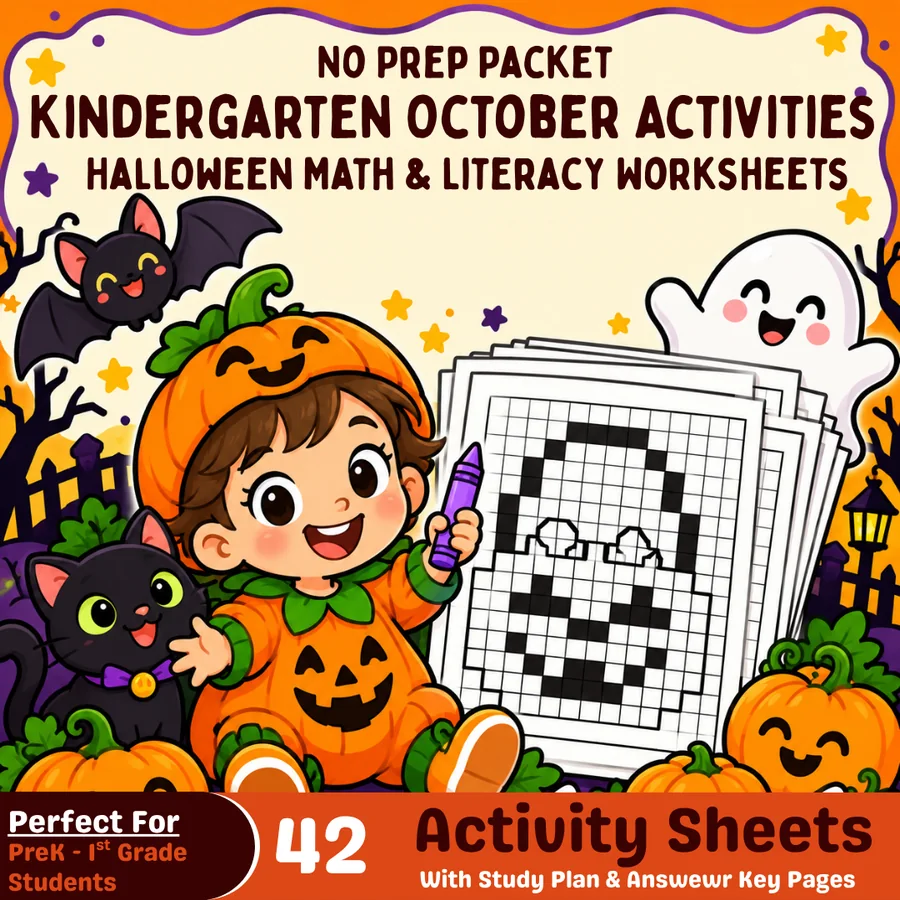
This guide walks through how to build sight word fluency in a way that is consistent, differentiated and, honestly, fun. It focuses on one of the most effective low-prep formats teachers use in the fall: color by sight word mystery pictures. You will find a clear explanation of why the format works, how to set it up for a whole class with mixed reading levels, how to run it in centers and small groups, and a week-by-week plan you can follow from September through November.
What Sight Words Are, and Why They Matter So Much
The phrase "sight words" gets used in two slightly different ways, and it helps to separate them.
The first meaning is high-frequency words: the small set of words that make up a huge share of everything children read. Words like the, and, a, to, is, in, it, you, of appear on almost every page of an early reader. If a child can read these instantly, they free up their attention for the newer, harder words in a sentence.
The second meaning is words that are hard to decode with the phonics a child knows so far. Said, was, of, one and the do not follow the simple patterns kindergarteners are learning, so children need extra practice to store them in memory.
Many of the most common words fall into both groups, which is why lists like the Dolch sight words became a staple of early literacy. The Dolch lists group high-frequency words by level. The Pre-Primer list has 40 words, the Primer list has 52, and the First Grade list has 41. Teachers have used these lists for generations because they give a clear, manageable target for each stage.
It is worth saying clearly: sight word practice works best alongside phonics instruction, not instead of it. When you teach "said," point out the letters and sounds that do follow the rules (the s and the d) and the part that is tricky (the "ai" that sounds like a short e). That way children connect the word to what they already know about letters and sounds, and the word sticks faster. Color by sight word pages are a practice tool for that learning, not a replacement for teaching it.
Why Color by Sight Word Works So Well
Color by sight word activities look simple, but they hit several things young readers need all at once.
Repetition without boredom
Automatic word reading comes from many successful exposures. A single mystery picture grid can ask a child to read the same handful of words dozens of times. Because each word is attached to a color and a hidden picture, children do not experience it as drill. They are solving a puzzle, and the reading is the key.
Built-in accountability
When a child misreads a word and colors the wrong square, the picture starts to look off. Children notice quickly when a pumpkin has a blue patch in the middle, and they go back to check. That small moment of self-correction is exactly the habit we want readers to build: noticing when something does not make sense and fixing it.
Visual discrimination practice
Many early sight words look alike: was and saw, on and no, the and then, went and want. A grid full of words forces children to look carefully at every letter, which strengthens the visual attention reading requires.
Fine motor work
Coloring inside small squares is excellent practice for pencil grip and control, which kindergarteners need for handwriting. You get literacy and fine motor practice in one activity.
High engagement, low prep
For teachers, the format is a gift. Once children know the routine, they can work independently, which frees you to pull a small group. Print the page, hand out crayons, and the activity runs itself.
How Mystery Pictures Are Different from Ordinary Coloring
Not all color-by-code pages are equal. A strong sight word mystery picture has a few features that make a real difference.
- Every word on the sheet is in the color key. If a child finds a word that is not in the key, they get stuck and lose confidence.
- Each word matches only one color. Ambiguity frustrates young readers and makes the picture impossible to complete correctly.
- Color words are kept out of the grid. If the grid includes the word "red" but the key says to color "red" squares green, children get confused. Leaving color words out avoids that problem entirely.
- The picture is recognizable. Children are motivated by the reveal, so the final image should be clear and satisfying, like a pumpkin, an owl or a sunflower.
- The word load fits the level. A pre-primer reader should not be facing first grade words, and an advanced first grader needs more challenge than "a" and "I."
These are exactly the design rules used in the Fall Sight Word Mystery Pictures, which includes eight original fall pictures, each offered at three Dolch levels.
Differentiation: One Picture, Three Reading Levels
The biggest challenge with sight word practice in a real classroom is the range. In the same kindergarten room in October, you might have children who know three words and children who already read early chapter books. Giving everyone the same list either bores the strong readers or overwhelms the beginners.
The solution is to offer the same picture at different word levels. Here is how it plays out:
- Children still learning the basics get a version built on Pre-Primer words such as a, and, big, can, go, help, look, play, see and the.
- Children ready for more get a Primer version with words such as all, are, came, did, good, have, like, saw, was and what.
- Strong readers get a First Grade version with words such as after, again, could, every, from, know, once, some, then and walk.
When the whole class reveals the same owl or pumpkin on the same day, nobody stands out for doing "the easy one." Children compare finished pictures, not word lists. That protects confidence, which matters enormously at this age.
How to decide which level each child gets
You do not need a formal assessment. Try this quick routine in the first weeks of school:
- Write ten Pre-Primer words on index cards.
- Show each card for about three seconds and note which words the child reads instantly.
- If a child reads eight or more, repeat with ten Primer words. If they read eight or more of those, try First Grade words.
- Start each child at the highest level where they read about half the words automatically. That leaves room to grow without frustration.
Recheck every three or four weeks. Children move quickly at this age, and moving someone up a level is a great motivator.
Introducing the Routine to Your Class
The first time you use a color by sight word page, model it carefully. Ten minutes of modeling saves many lost minutes later.
- Project or enlarge the page. Show the color key and the grid together.
- Read the key aloud with the class. Point to each word and its color. Have children read it back to you.
- Think aloud as you work. "This square says look. Let me check the key. Look is orange. I will color it orange." Then deliberately make a mistake and fix it: "Wait, this word is like, not look. Look at the letters. Like is green."
- Color a full row together. Children love seeing the first part of the picture appear.
- Explain the self-check. "If your picture looks strange, go back and reread the words in that part."
After the first two or three pictures, most children can work independently.
Tips that make it smoother
- Pre-sort crayons. Put only the colors in the key into a cup at each table. Fewer choices means fewer mistakes.
- Teach "read, find, color." Children should read the word out loud (or in a whisper voice), find it in the key, then color. Saying the word aloud is what turns coloring into reading practice.
- Use a "word finger." Have children point to each square as they read so they do not skip around.
- Allow highlighters for big grids. Some teachers let children mark each word lightly with a pencil dot after reading it, then color in batches.
Using Mystery Pictures in Literacy Centers
Color by sight word pages are a natural fit for a literacy center rotation. A simple setup:
- A bin with copies of each level, clearly labeled with a colored dot or a small symbol, not "easy" and "hard."
- A cup of crayons in the key colors.
- A finished answer key in a plastic sleeve so children can check their own work at the end.
- A "word wall" card for the week's words, so children can look up a word they forget.
Children usually take two center rotations to finish a full picture. That is fine. Have them write their name on the back and file it in a "finished later" folder.
Pairing children for partner reading
An excellent variation is partner reading. One child reads the word aloud, the partner finds the color in the key, and they take turns. Pair children at the same level or pair a slightly stronger reader with a developing one. The stronger reader gets practice explaining, and the developing reader gets support.
Small Group and Intervention Ideas
For children who are struggling with sight words, mystery pictures are a strong intervention tool because they offer many repetitions in a short time.
Try this 15-minute small group routine:
- Warm up (3 minutes). Flash the five or six words from today's grid on cards. Read them together, then have children read them alone.
- Word work (3 minutes). Build one tricky word with magnetic letters. Talk about which letters make their expected sounds and which part is tricky.
- Color (8 minutes). Children work on the grid while you listen to each one read a row aloud.
- Wrap up (1 minute). Each child reads their two favorite words from the picture.
Keep a simple tracking chart. Each time a child reads a word correctly without help on three different days, give them a check. When a word has three checks, it moves to "known."
A 6-Week Fall Sight Word Plan
Here is a sample plan that uses one mystery picture per day across six weeks of fall. It mirrors the structure of the 6-week study plan included in the Fall Sight Word Mystery Pictures.
Week 1: Pumpkin and Apple
Start with the most familiar fall images. Spend Monday modeling the routine with the whole class. Tuesday through Thursday, children complete their leveled pumpkin page, then begin the apple. On Friday, review the week's words with a quick game of "Word Hunt," where you call out a word and children find it on their finished picture.
Week 2: Fall Leaf and Acorn
By now children know the routine, so move the activity into centers. Pull small groups while others color. Introduce the Words to Know list: each time a child reads a word correctly three times, they color a leaf on their list.
Week 3: Owl and Mushroom
This is a great week to do the first level check. Some children will be ready to move up a level. Celebrate those moves. Children love announcing, "I moved up!"
Week 4: Sunflower and Fall Tree
These pictures are a little more detailed, which builds stamina. Encourage children to finish in two sessions. Add a writing extension: children write one sentence using two of the words from their picture, such as "I can see the owl."
Week 5: Review and Repeat
Let children choose a favorite picture and complete it at the next level up. Revisiting a known picture at a harder level is surprisingly motivating, because they know what the reward looks like.
Week 6: Celebration Week
Complete any unfinished pictures, check Words to Know lists, and hand out certificates. Display all the finished pictures on a bulletin board titled something like "Look What We Can Read!" Families love seeing the progress.
Extension Activities That Use the Same Words
To lock in the words children practice on mystery pictures, connect them to other activities.
- Sentence building. Write the week's words on cards and have children build sentences with them. "I like the big owl."
- Rainbow writing. Children trace a word three times in different colors.
- Sight word hopscotch. Tape words on the floor. Children read each word as they hop on it.
- Find it in a book. Give children a sticky note with one word and have them hunt for it in a library book.
- Word detective. During read-alouds, pause and ask children to signal when they hear a word from this week's list.
- Take-home flash rings. Send home a ring of the child's current words so families can practice for two minutes a night.
Communicating with Families
Families often want to help with reading but are not sure how. Sight words are one of the easiest areas to involve them. Send home a short note that explains:
- What sight words are and why they matter.
- Which level their child is working on.
- One simple way to practice: read each word card once a night and celebrate the ones the child knows instantly.
You can also send home a finished mystery picture with a sticky note: "Ask me to read the words in my pumpkin!" Children feel proud, and families get a concrete way to see progress.
Common Mistakes to Avoid
Even a great activity can lose its value if it is used the wrong way. Watch for these pitfalls.
- Coloring without reading. If children are matching letter shapes without saying the word, they are not practicing reading. Insist on whisper reading.
- Giving everyone the same level. This is the fastest way to lose both your strongest and your most struggling readers.
- Skipping the modeling. Children who do not understand the routine will color randomly and lose interest.
- Too many new words at once. Keep new words limited and spiral back to known ones often.
- No check at the end. Always have children compare their picture to the answer key. The check is part of the learning.
How to Track Progress Without Extra Paperwork
You do not need complex data systems to know whether sight word practice is working. A few simple habits are enough.
- Words to Know lists. Each child keeps their own list and colors a leaf for each mastered word. You can glance at it during a conference.
- Monthly quick checks. Use the same index card routine you used at the start. Count words read instantly and record the number.
- Running record notes. When you listen to a child read a short book, note which sight words slowed them down. Add those words to their practice.
When the number of instantly read words grows each month, you know the practice is working.
Frequently Asked Questions
How many sight words should a kindergartener know?
It varies by school and curriculum, but many kindergarten programs aim for children to read most of the Pre-Primer words and begin the Primer list by the end of the year. Focus less on a number and more on steady growth for each child.
Is color by sight word too easy for first graders?
Not when the word level matches the child. A First Grade Dolch version includes words like could, every, once and thank, which challenge many first graders. Advanced readers can also be asked to read the whole grid aloud to a partner before coloring.
How long does one mystery picture take?
Most children finish in 15 to 25 minutes, depending on the grid size and their reading level. Many teachers split one picture across two sessions.
Can I use these for homework?
Yes. They work well as homework because they are self-explanatory and families can check the finished picture against the key. Send the answer key separately or keep it in class if you want to check the work yourself.
What if a child colors the whole picture wrong?
That is useful information. Sit with the child and have them read a row aloud. Usually the issue is one or two confusing words, such as was and saw. Add those to their practice and try the same picture again.
Bringing It Together
Sight word fluency is one of the foundations of early reading. When children read the most common words automatically, they can focus their energy on decoding new words and understanding what they read. Color by sight word mystery pictures give children the many repetitions they need in a form they actually enjoy, and the three-level design lets every child in the room practice at the right level.
If you want a ready-made set for this fall, the Fall Sight Word Mystery Pictures includes 24 worksheets (eight pictures at three Dolch levels), Words to Know lists for each level, color answer keys and a 6-week study plan, all in printer-friendly black and white. Print a week at a time, set out the crayons, and watch your readers' confidence grow one square at a time.